
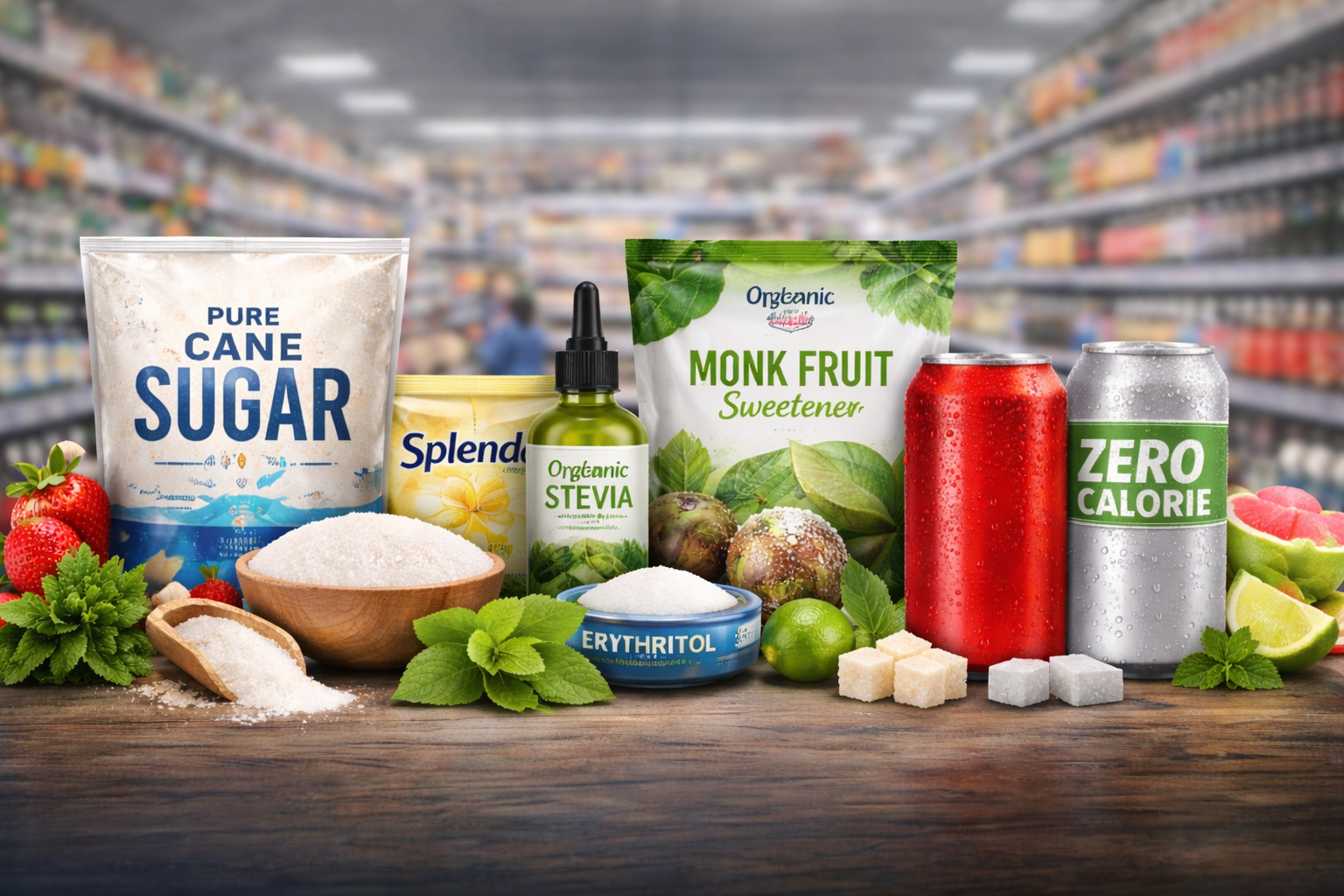
Sweetness in Beverages: Sugar, Substitutes, and the Truth About “Natural” Sweeteners
If you work in beverages, sweetness is not optional knowledge. Sweetness is one of the most powerful drivers of consumer preference, repeat purchase, and brand loyalty — the fastest way to ruin a beverage is to misunderstand how sweeteners actually behave in real formulas.
Here is a practical guide to understanding sweetness in beverages: where sweetness started historically, why sugar became dominant, how sugar substitutes evolved, & why most “natural” systems struggle to match sugar.
Quick Orientation: Why Sweetness Matters So Much
Sweetness does far more than make something “taste sweet.”
-
Flavor balance: sweetness counteracts acidity, bitterness, and astringency
Aroma perception: sweetness changes how flavors “lift” and how long they last
Mouthfeel/body: sugar especially creates weight, viscosity, and roundness
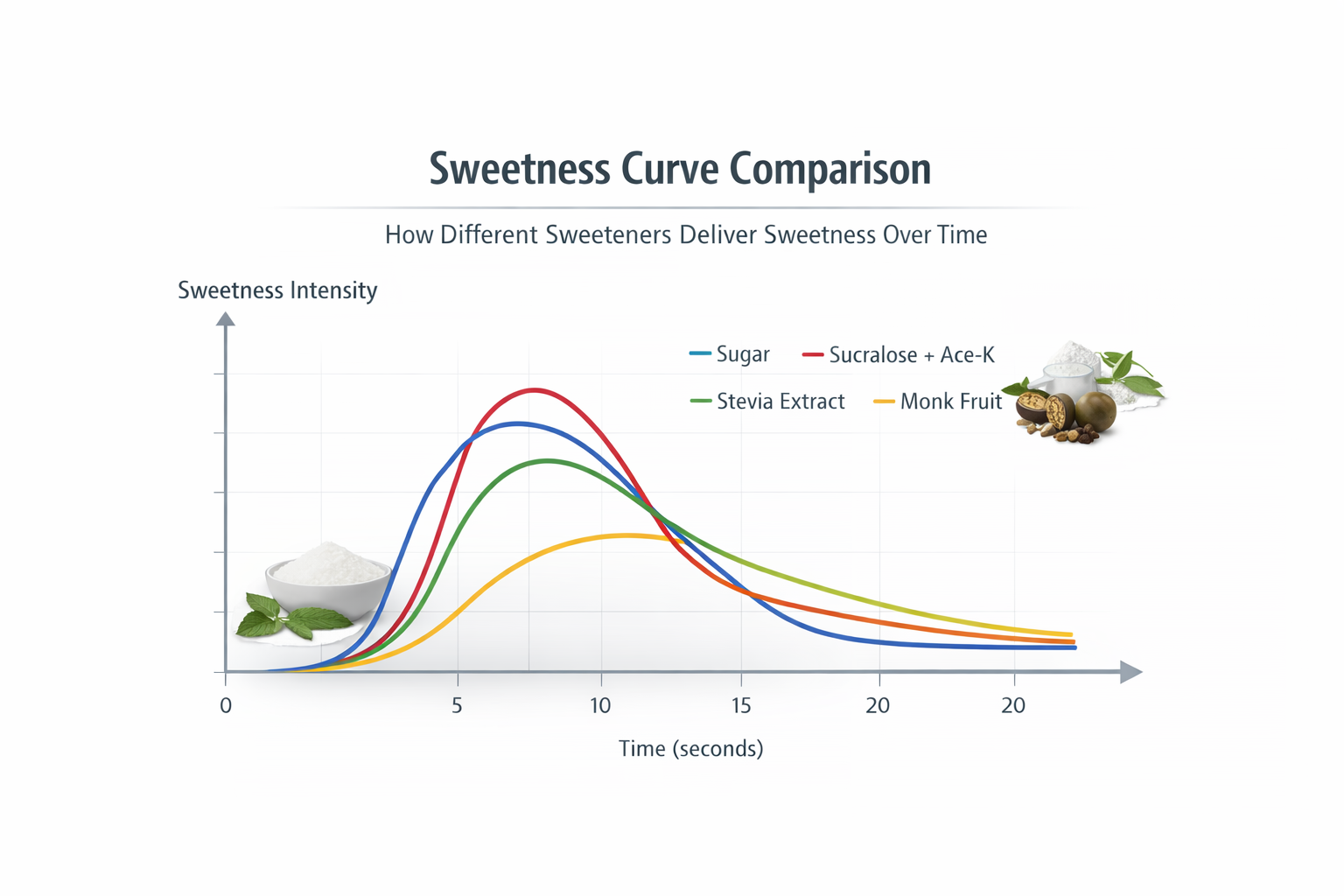
Finish/aftertaste: the sweetness curve determines whether a drink feels clean or unpleasant
Consumer satisfaction: sweetness interacts with physiology and expectation in a way that’s hard to replicate
If you take away sugar without rebuilding what it was doing, the beverage often becomes:
thin, sharp, bitter, metallic, or “diet-like”
less satisfying even if it smells great
harder to finish, and less likely to be repurchased
The Premise: Sugar Is the Most Used and Most Loved Ingredient in Beverages
Sugar (sucrose) is one of the cornerstone ingredients of the food and beverage industry. It is widely used because it delivers an unusually complete package:
-
Sugar provides:
an immediate, familiar sweetness
a smooth, “round” mouthfeel
a clean finish (when balanced properly)
strong compatibility with flavors and acids
calories and metabolic effects that influence perceived energy and satisfaction
In the beverage world, sugar isn’t just the gold standard for sweetness.
It is the gold standard for overall sensory design.
A Short History of Sweetness: From Leaves and Honey to Industrial Sugar
Humans have pursued sweetness for as long as recorded history.
-
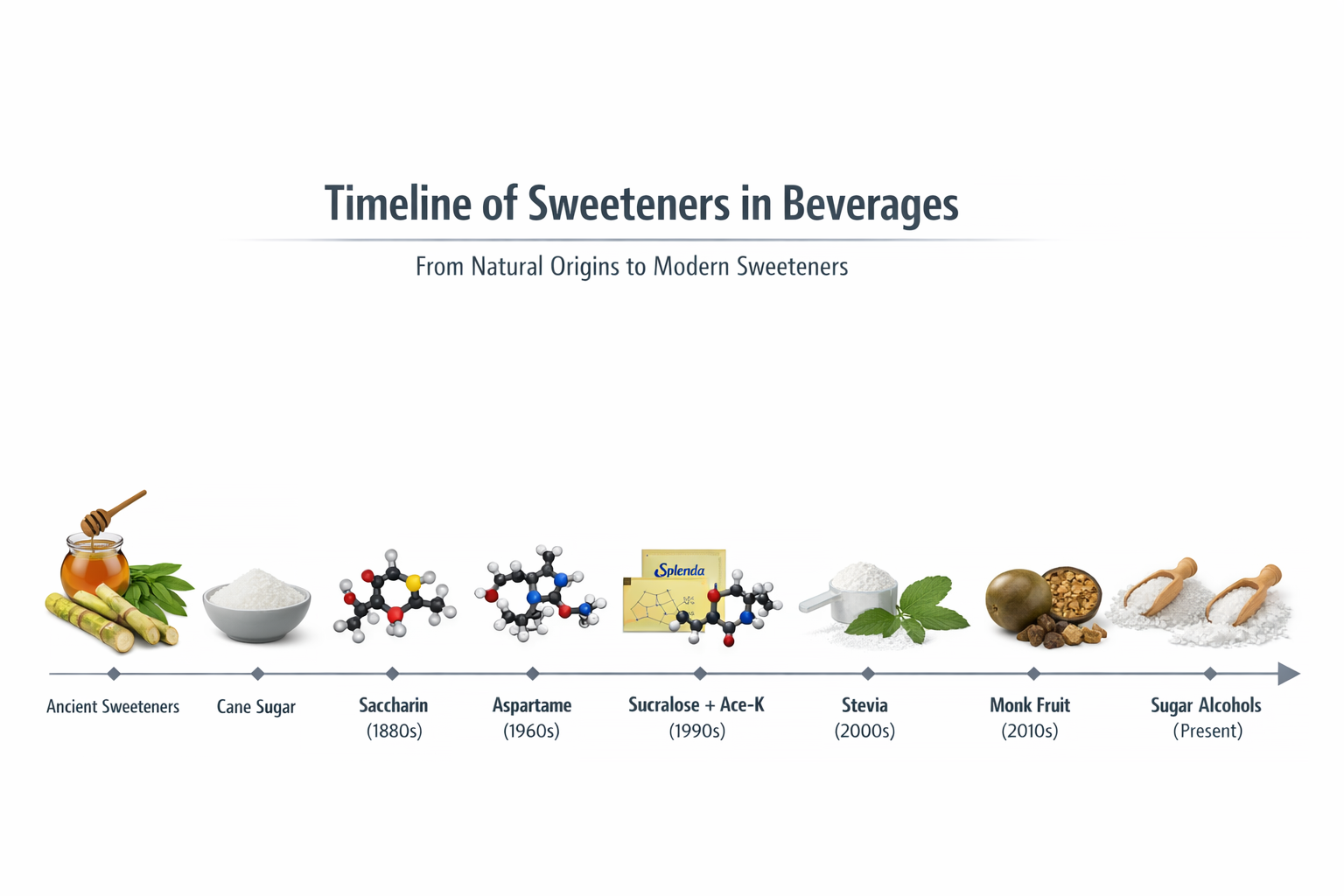
Honey (ancient and widely used)
sweet plant extracts and sweet leaves in various cultures
sugarcane and cane juice, later refined in early civilizations
monk fruit (luo han guo) in parts of Asia (traditional use for centuries)
stevia leaves used traditionally in South America
These were meaningful historically, but they lacked what modern beverages require:
consistent potency
predictable taste behavior
stable supply chains
scalable cost structure
Once industrial sugar production expanded, it became the dominant sweetness engine for beverages globally.
Sugar Isn’t Just Sweet: It’s Structural
Most people think sweeteners are only about taste. In beverages, that’s a misunderstanding.
-
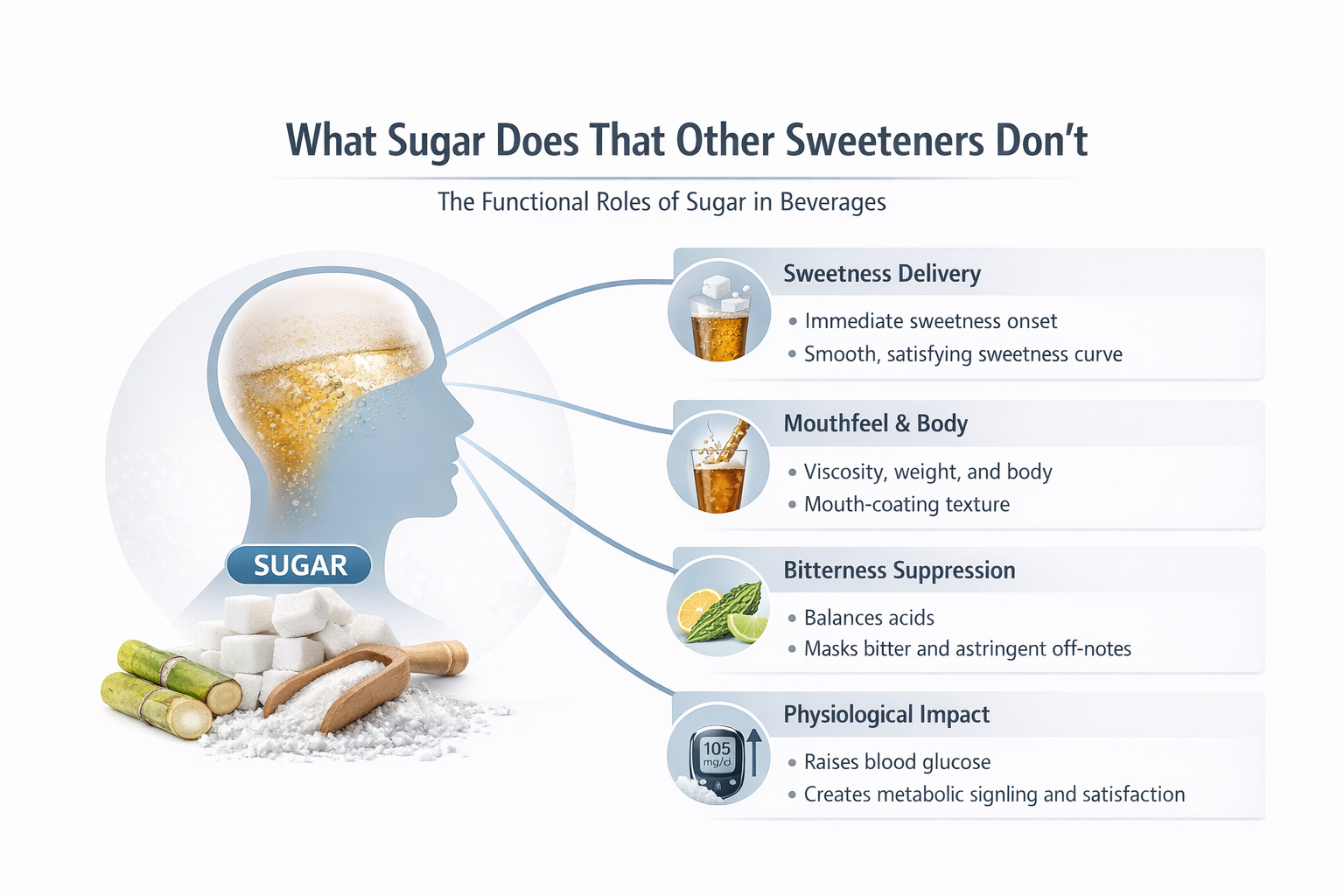
1) Sugar impacts “body”
Sugar creates viscosity and perceived thickness. Remove it and many beverages feel watery or hollow.
2) Sugar influences flavor release
Sugar affects how aromas and flavors rise and linger. This changes the “shape” of the drink in the mouth.
3) Sugar affects bitterness and acid
Sugar helps hide bitterness and smooth high acid profiles.
4) Sugar has physiological effects
Sugar impacts blood glucose and metabolic signaling. That changes perceived energy and satisfaction in ways that are not only sensory — they’re biological.
This is one major reason why replacing sugar is difficult:
You’re not replacing one job. You’re replacing several.
The Rise of Sugar Substitutes: Why They Were Invented
-
calorie reduction
“diet” positioning
diabetic or blood sugar–related needs
cost control (in certain markets and periods)
regulatory, tax, or trend pressures
“clean label” and “natural” consumer demand (more recently)
Over decades, the industry developed both artificial and natural alternatives, each with tradeoffs.
The Artificial Era: Sweeteners Engineered for Beverage Performance
-
Artificial sweeteners grew because beverages are harsh environments:
acids, flavors, carbonation, heat processing, shelf life, and sometimes protein or emulsions.Artificial systems generally win on:
stability
clean sweetness delivery (when blended properly)
cost and supply reliability
repeatable performance across flavors
Saccharin (early wave)
High intensity sweetness, but often harsh or metallic.
Aspartame (major wave)
Improved sweetness profile vs older options, but not ideal in all processing or shelf-life conditions.
Sucralose and the “Best Performing” Diet Sweetness System
-
Sucralose (commonly known through the brand “Splenda”)
Sucralose was a major step forward because it can taste closer to sugar than many earlier artificial options.
Acesulfame Potassium (Ace-K)
Ace-K is often used in blends to improve the sweetness curve.
The reality in beverage formulation
The best-performing non-nutritive system in many beverage applications is:
Sucralose + Acesulfame Potassium (Ace-K)
Why this blend works well:
better upfront sweetness
reduced bitterness compared to single-sweetener systems
more sugar-like sweetness curve
strong stability and shelf-life performance
Important note:
This is still artificial — but in pure taste/performance terms, it often outperforms “natural” zero-calorie systems.
The Natural Wave: Stevia and Monk Fruit Become Mainstream
-
As consumer preference shifted toward “natural” and away from “artificial,” two ingredients rose most prominently:
Stevia
A plant-derived sweetener with high-intensity glycosides.
Common challenges:bitterness
licorice-like notes
delayed onset or lingering sweetness
flavor interactions that can amplify off-notes
Monk Fruit (Luo Han Guo)
A fruit-derived sweetener with mogrosides.
Common challenges:unique lingering character
still not sugar-like without support systems
variability by grade and blend
The honest industry statement
No natural zero-calorie sweetener compares favorably to sugar in total sensory performance.
The best natural substitutes available are generally stevia and monk fruit — and even these require careful formulation to be broadly acceptable.
“Less Talked About” Natural Sweetening Tools: Erythritol and Xylitol
-
In addition to high-intensity natural sweeteners, formulators often use sugar alcohols to add sweetness and body with fewer calories.
Erythritol
supports sweetness and mouthfeel
can have a cooling effect
typically better tolerated than some other polyols, but still needs careful use
Xylitol
sweet and provides body
can create digestive tolerance issues at higher intake
not always ideal for every beverage type
These ingredients are often used in formulas without being the hero of marketing, because:
the label story may not be the objective
the objective is function: body, sweetness support, and texture
The Big Problem with Natural Sweeteners: They Don’t Behave Like Sugar
-
Sugar replacement is not a “swap.”
It is a rebuild.Natural sweeteners don’t replicate:
sugar’s mouthfeel contribution
sugar’s sweetness curve (onset and decay)
sugar’s bitterness suppression
sugar’s metabolic/physiological impact
Even if a beverage is “sweet enough” on paper, it can still feel wrong:
hollow
sharp
thin
oddly lingering
or “diet-like”
This is why many stevia/monk fruit beverages fail in mainstream markets:
They may win on label, but lose on repeat purchase.
The Marketing Reality: “Natural Sweetened” Rarely Pays for the Flavor Penalty
-
“naturally sweetened”
“no artificial sweeteners”
“plant-based sweeteners”
But here is the practical reality:
The marketing upside rarely compensates for the flavor downside unless you are intentionally targeting a narrower segment of consumers who already accept stevia/monk fruit taste profiles.
That segment exists — but it’s not the majority of beverage buyers.
If you are building a mass-market beverage, you should be cautious:
you can win the first purchase with label claims
you often lose the second purchase if flavor satisfaction is lower
In beverages, flavor is the business model.
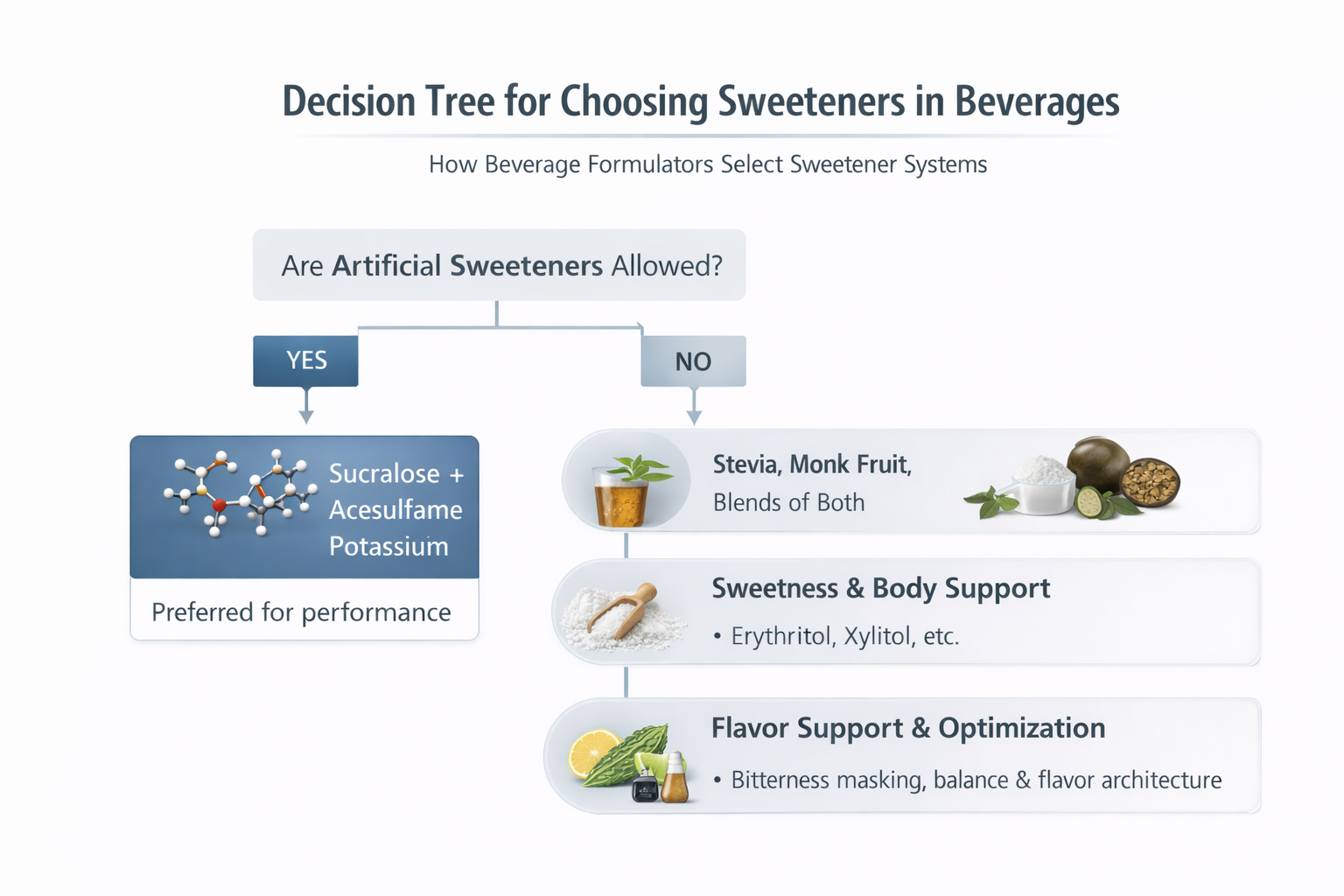
Practical Guidance: What Professionals Do
-
Many experienced beverage developers choose:
Sucralose + Ace-K
because it performs closest to sugar for zero-calorie sweetness.If artificial sweeteners are not allowed:
Professionals typically choose:
stevia and/or monk fruit
supported by:erythritol, sometimes xylitol, and other mouthfeel-building tools
plus:bitterness masking strategies
acid balancing
flavor architecture changes
The key takeaway:
Natural systems are possible — but they require advanced formulation skill.
They’re not “plug-and-play.”
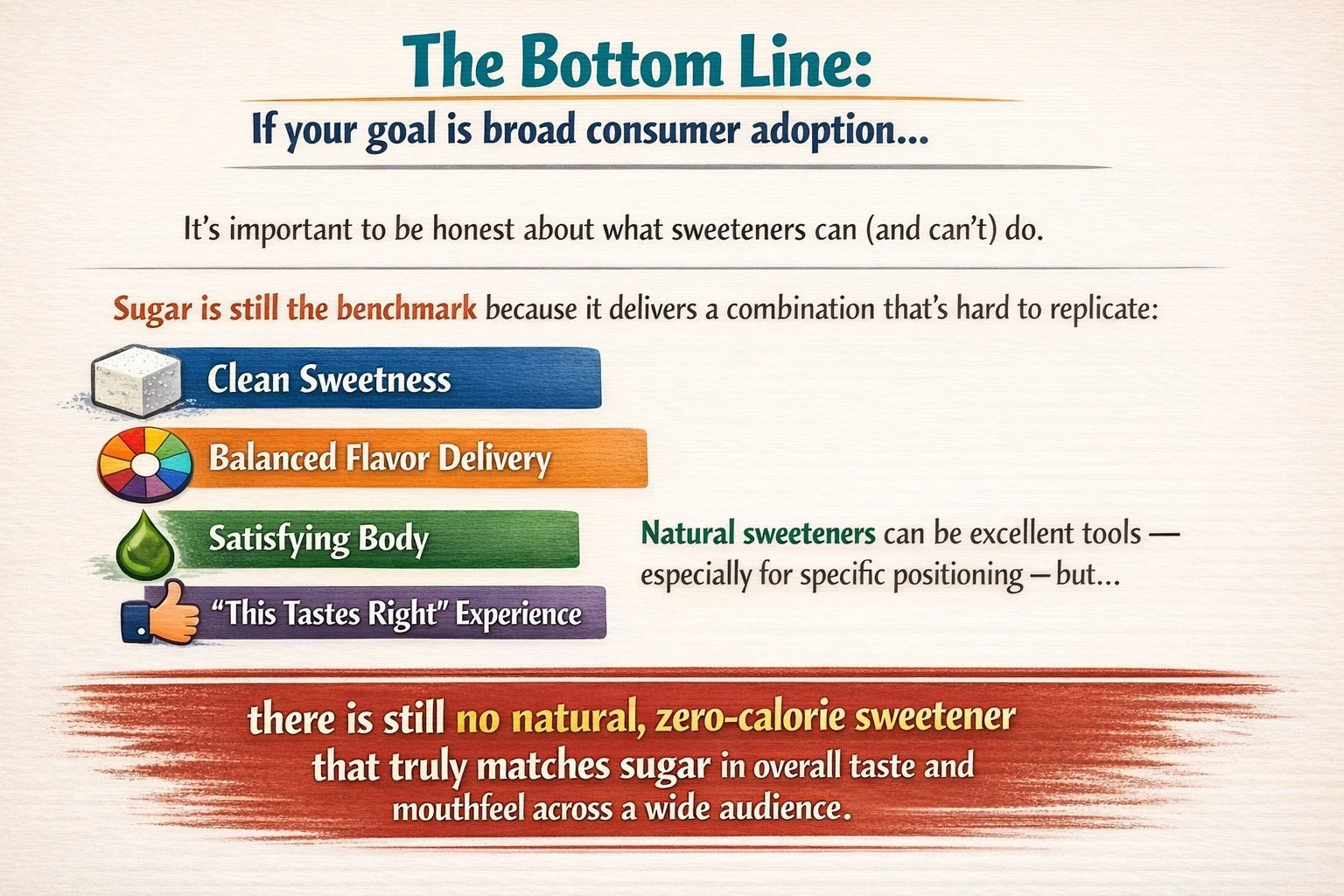
So if your goal is mass-market appeal, you must plan for the real tradeoffs:
Clean label vs. drinkability
The cleaner you go, the more likely you are to introduce bitterness, lingering aftertaste, or a thinner mouthfeel that can reduce enjoyment and sales for certain consumers.Claim vs. repeat purchase
“No sugar” and “natural” can drive trial — but beverages win only when the product tastes good enough to buy it again.Niche audience vs. mass-market preference
Some consumers love health-forward taste profiles and will accept stevia/monk fruit notes. Most consumers still prefer a sugar-like sweetness experience, especially in flavor-forward drinks.For more information about sweeteners or anything else related to the beverage industry, contact us today >