
Intrinsic Preservation
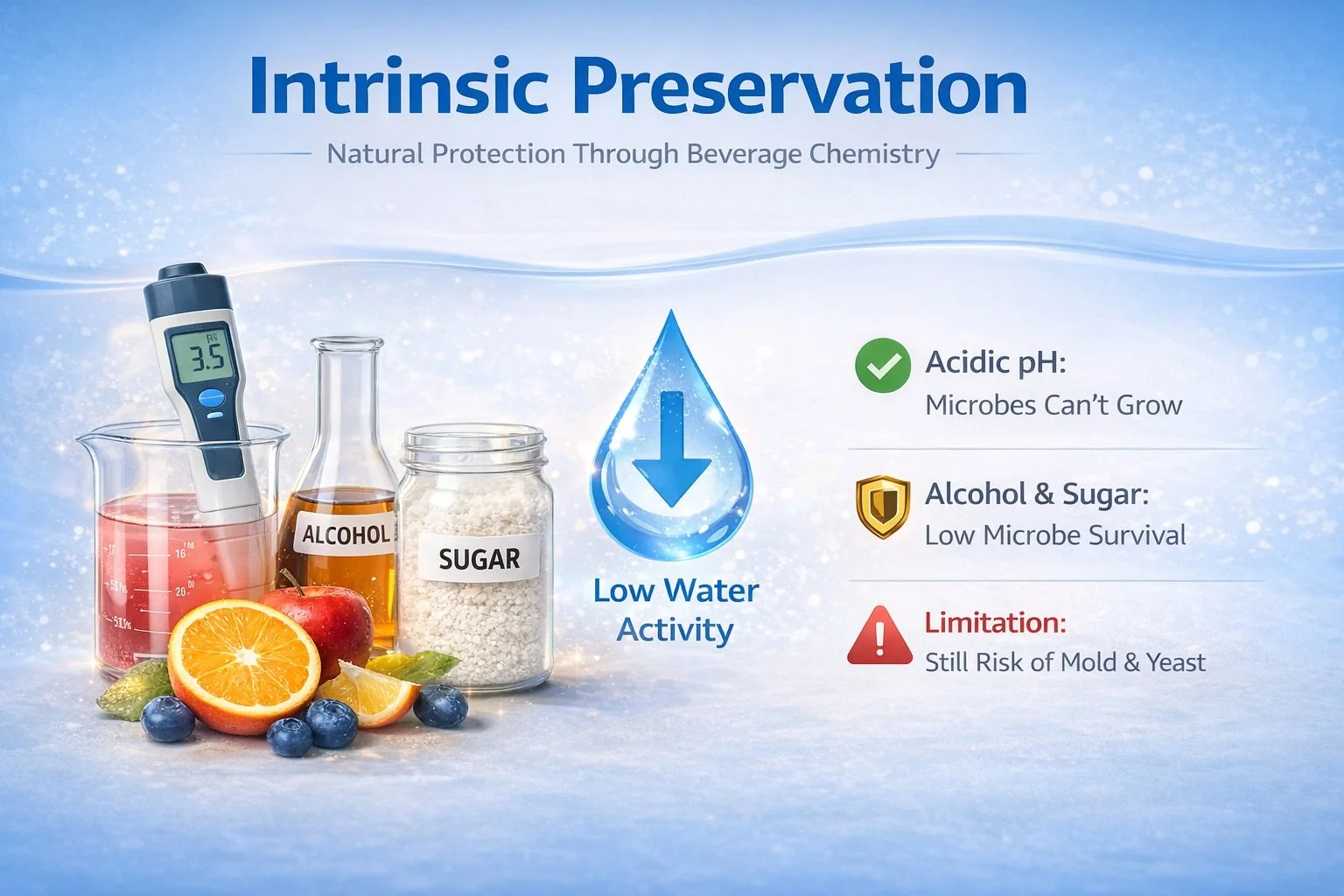
Intrinsic preservation means the beverage protects itself because of its own chemistry.
Microbes need certain conditions to grow: moderate pH, available water, nutrients, and temperature. If a beverage is highly acidic (typically below pH 4.6), most dangerous pathogens cannot survive. Alcohol also inhibits microbial growth. High sugar concentration can reduce available water (lower water activity), making survival difficult for microbes.
In this system, no additional processing may be required beyond standard sanitation and filling.
-
Nothing artificial is added. Flavor and structure remain unchanged. This is often the cleanest and simplest approach.
-
Acidic beverages like sodas, sports drinks, energy drinks, flavored waters, and many fruit juices.
-
Does not protect against all spoilage organisms.
Mold and yeast may still grow if filling sanitation is poor.
pH must be consistently controlled and validated.
Not suitable for low-acid beverages.
Intrinsic preservation works well when the formulation naturally supports safety.
Added Preservatives
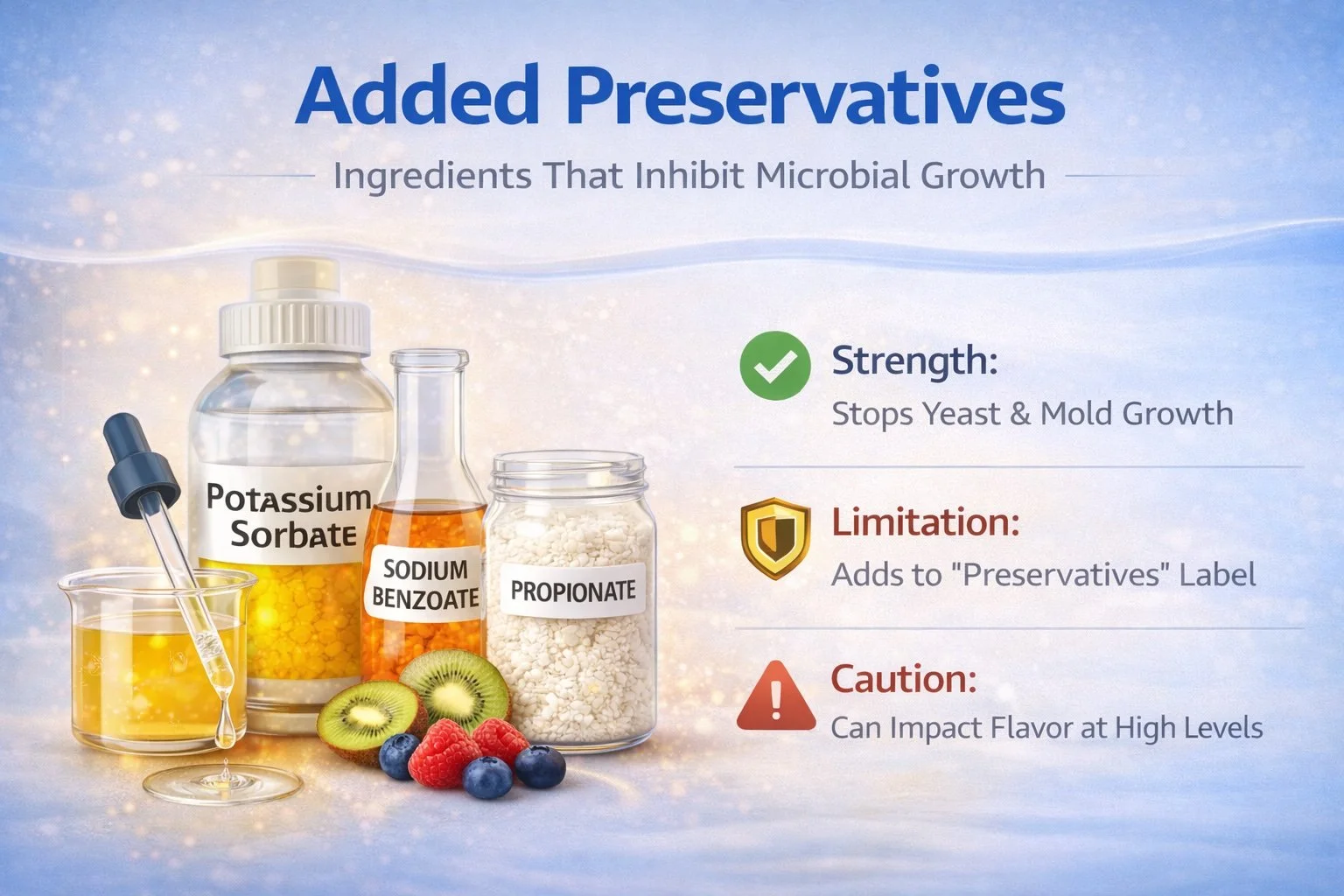
Preservatives such as potassium sorbate & sodium benzoate inhibit yeast, mold, & bacteria.
Work by interfering with microbial enzyme systems & metabolic pathways. Most preservatives are effective at lower pH levels.
They are typically added during formulation before filling.
-
Flavor impact is usually minimal at proper usage levels. However, in certain formulas, preservatives can interact with flavors or create off-notes if improperly balanced.
-
Acidic shelf-stable beverages that require additional microbial protection.
-
Consumer perception issues (“no preservatives” positioning).
Effectiveness depends on pH.
Overuse can cause flavor changes.
Regulatory limits apply.
Preservatives are reliable and cost-effective but may not align with certain brand strategies.
Velcorin (DMDC)
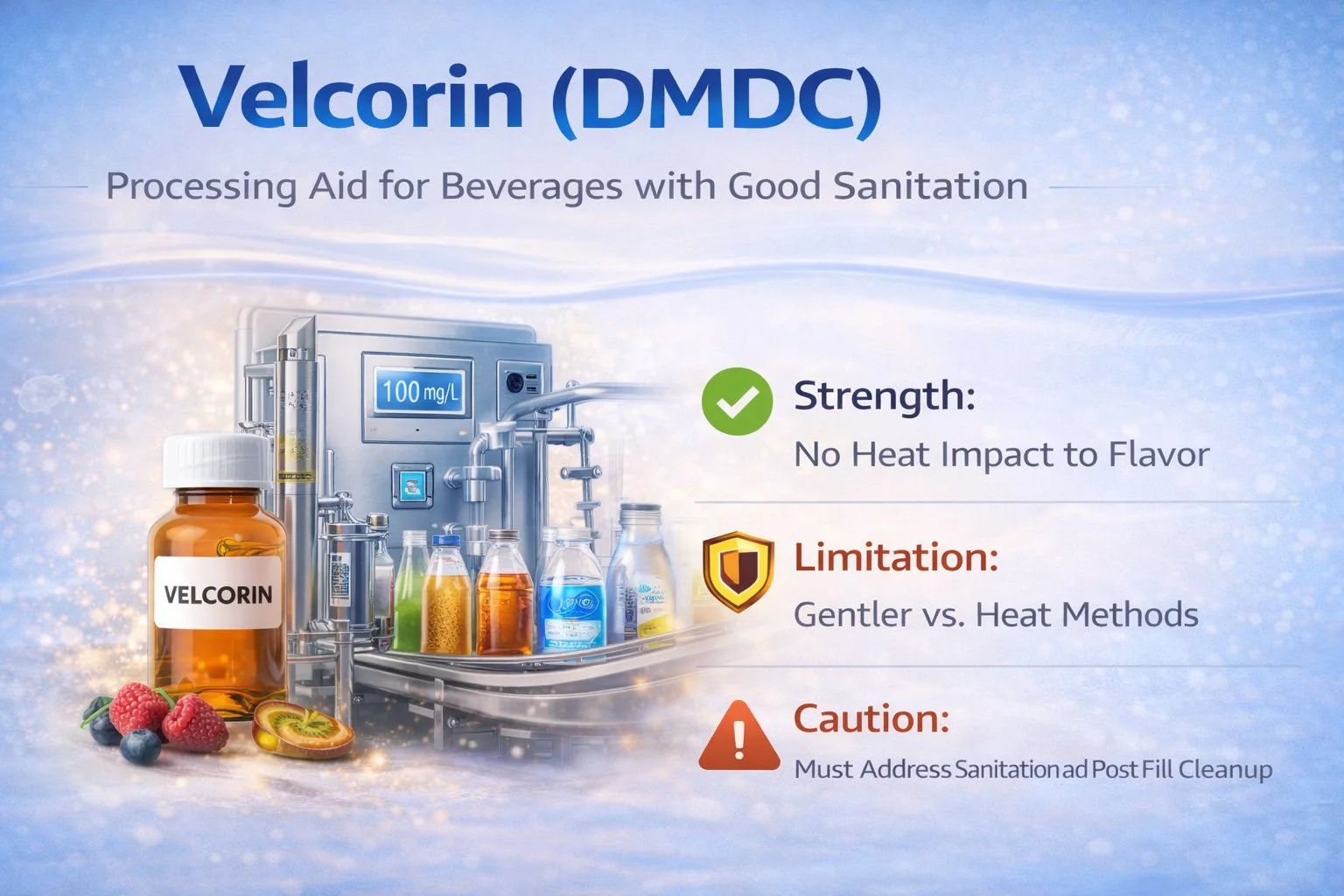
Velcorin (Dimethyl Dicarbonate) is a processing aid added immediately before filling.
It works by penetrating microbial cells and inactivating key enzymes necessary for survival. Within hours, it breaks down into small amounts of methanol and carbon dioxide and is no longer active.
It does not remain as a functional preservative in the beverage.
-
There is no heat exposure, so flavor remains intact. Carbonation is unaffected.
-
Carbonated soft drinks, teas, flavored waters, and certain alcoholic beverages.
-
Does not replace good sanitation.
Limited protection compared to full thermal sterilization.
Requires specialized dosing equipment.
Not suitable for high microbial loads.
Velcorin is best as a supplemental safeguard.
Flash Pasteurization
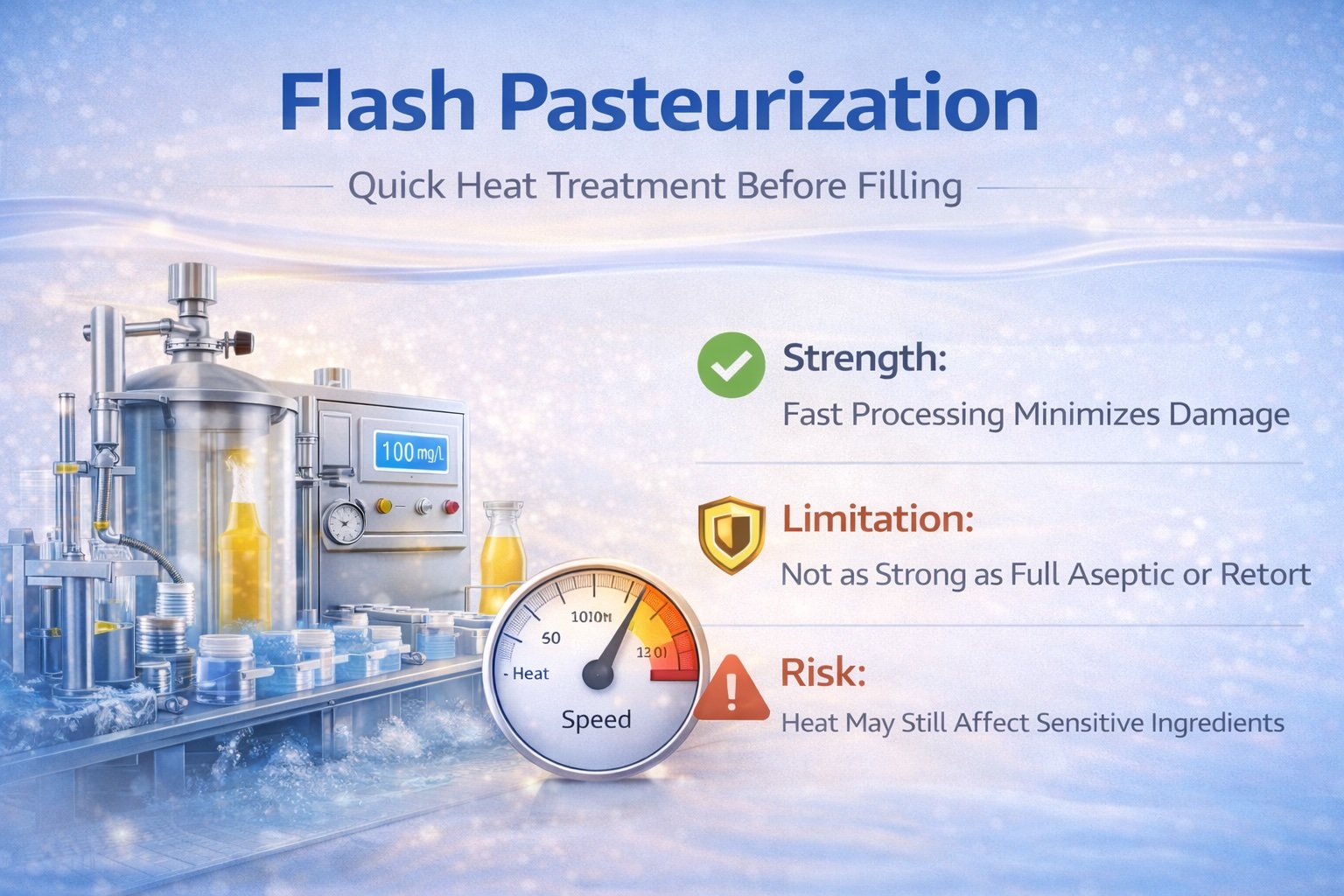
Flash pasteurization rapidly heats to a target temperature for a short time, then cools it quickly.
The heat inactivates most vegetative bacteria, yeast, and molds.
The product must then be filled under sanitary conditions.
-
Moderate heat exposure may slightly impact sensitive flavors or nutrients, but far less than retort.
-
Teas, juices, some RTDs.
-
Requires clean filling systems.
Not as strong as aseptic or retort.
May not eliminate spores.
Flash pasteurization balances quality and safety.
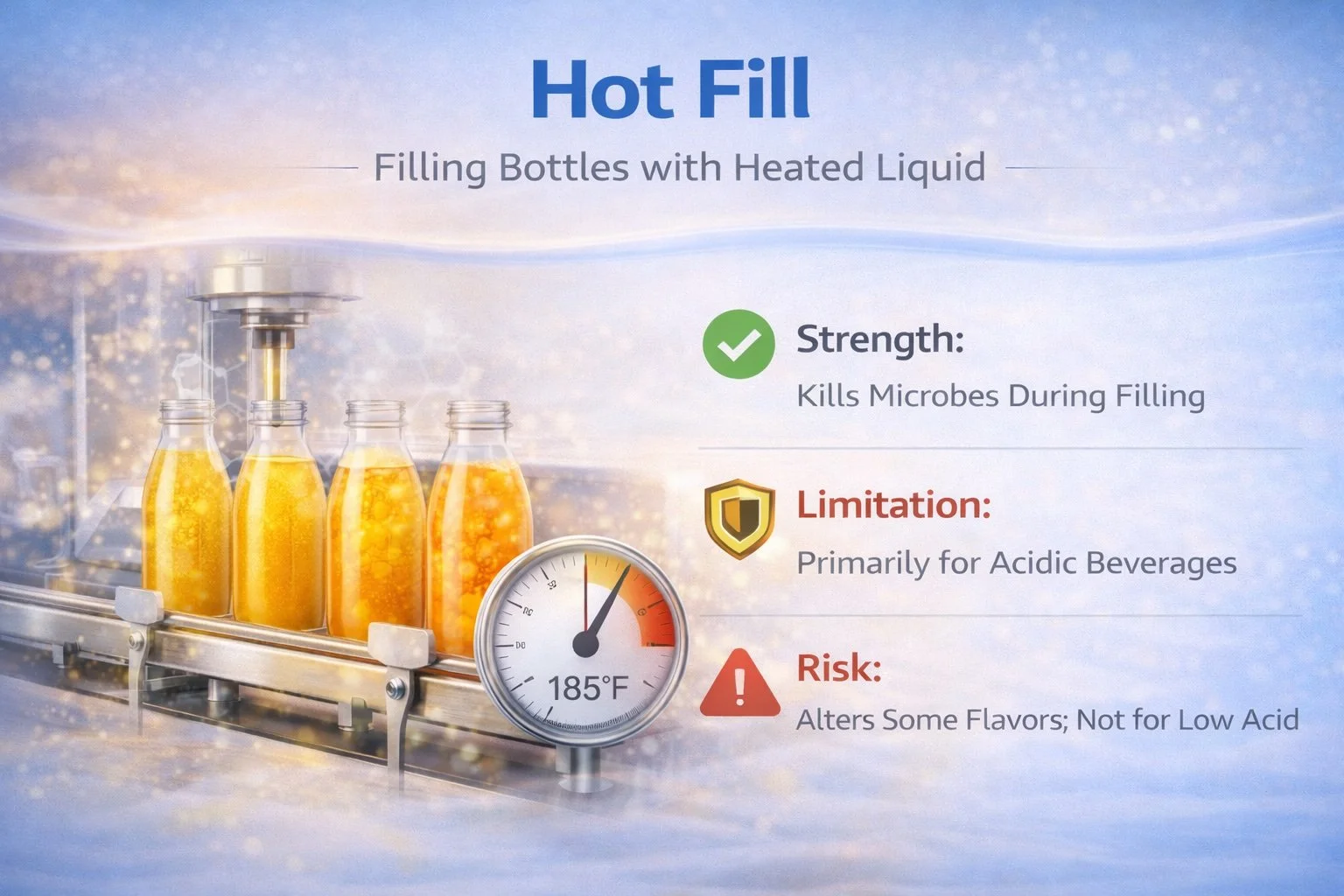
Hot Fill
The beverage is heated to high temperature and filled into containers while still hot. The bottle is inverted to sterilize the cap area.
The heat kills microbes and sanitizes packaging surfaces.
-
Noticeable but manageable heat impact. Some flavor rounding may occur.
-
High-acid beverages.
-
Not suitable for low-acid beverages without additional controls.
Bottle distortion risk.
Possible flavor degradation.
Hot fill is common and dependable for acidic drinks.
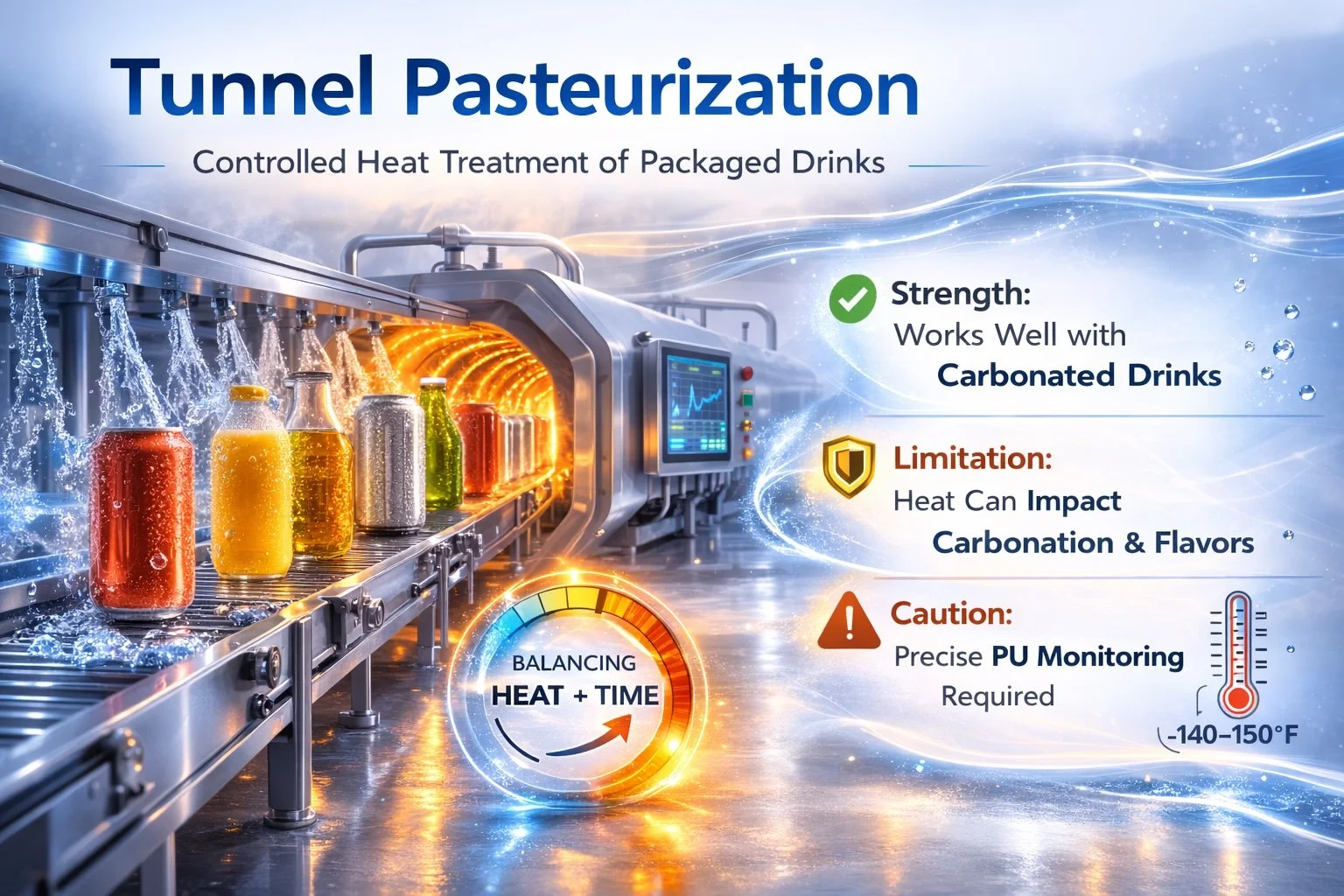
Tunnel Pasteurization
Sealed containers pass through controlled temperature zones where hot water sprays gradually heat and cool the product.
Heat exposure is measured in Pasteurization Units (PUs).
-
Carbonation may slightly decrease. Some flavor compounds may shift.
-
Carbonated beverages, beer, sparkling RTDs.
-
Overprocessing reduces quality.
Heat affects carbonation and sweeteners.
Requires precise validation.
Tunnel pasteurization is effective for sealed carbonated products.
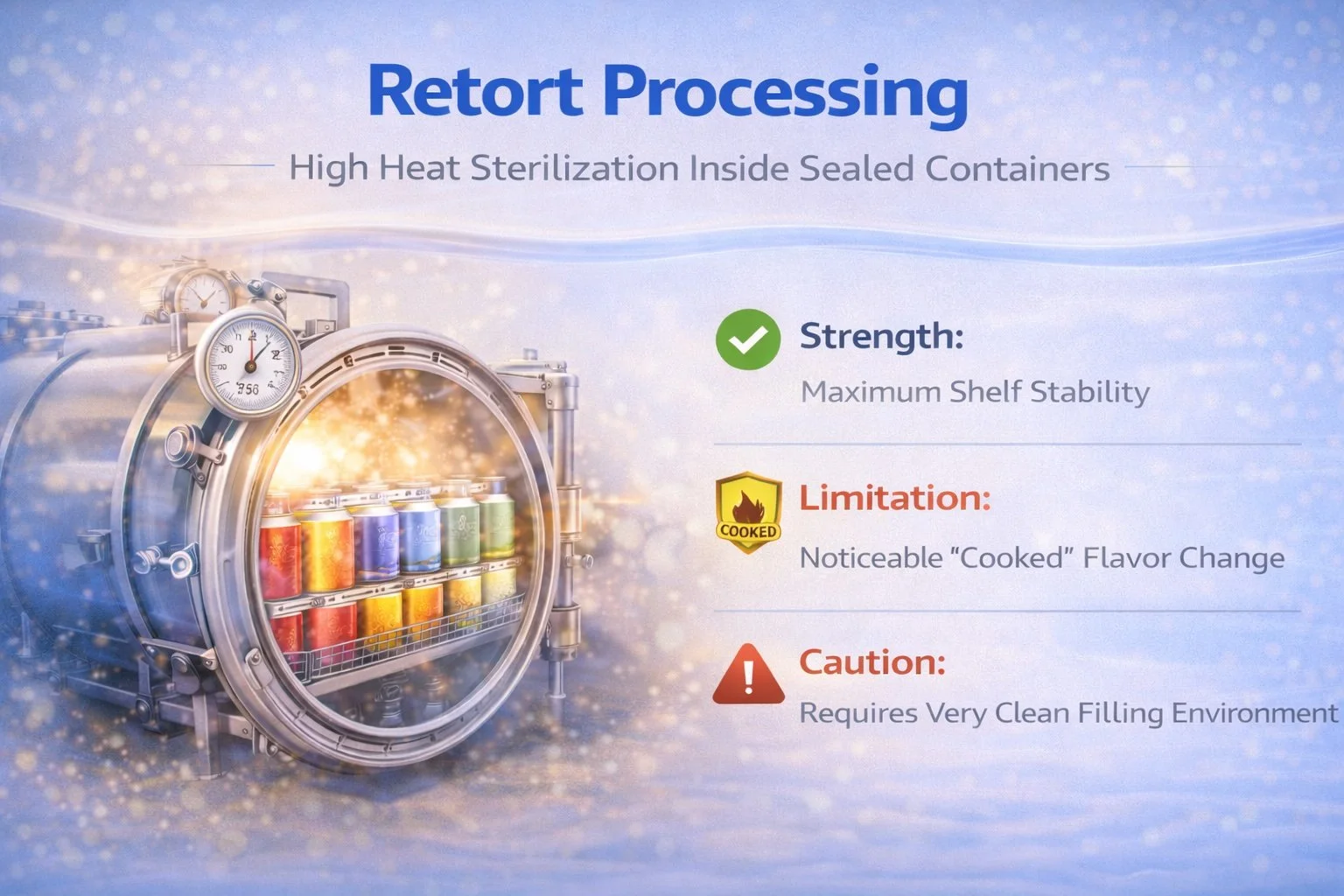
Retort uses high-pressure steam or hot water to heat sealed containers above boiling temperatures.
This process destroys vegetative cells and spores, creating commercial sterility.
What happens to the drink:
Significant heat exposure can change flavor, color, proteins, and texture.
Best use case:
Shelf-stable nutrition drinks and products requiring maximum safety margins.
Risks and limitations:
“Cooked” taste.
Texture changes.
Not ideal for delicate flavors.
Retort provides the strongest shelf stability but with highest quality trade-offs.
Aseptic Processing
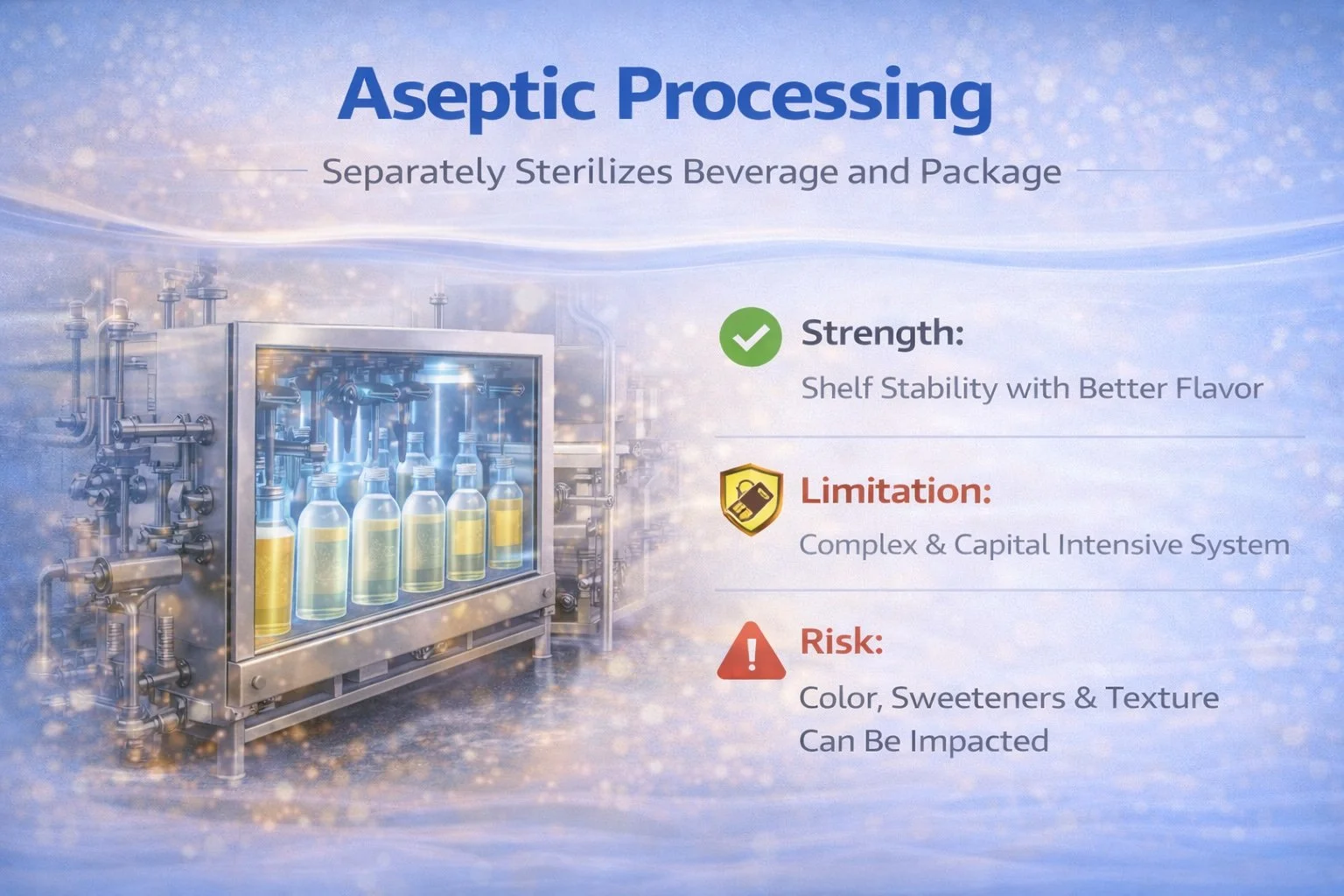
Liquid is ultra-heat treated (UHT) for seconds at very high temperature, rapidly cooled, then filled into sterilized containers in a sterile environment.
Because heating time is short, flavor damage is minimized compared to retort.
What happens to the drink:
Good flavor retention relative to full retort. Long ambient shelf life.
Best use case:
Protein drinks, plant-based milks, shelf-stable teas.
Risks and limitations:
Complex and capital intensive.
Strict sterility required.
Some heat impact remains.
Aseptic provides strong shelf life with better flavor retention than retort.
UV Treatment
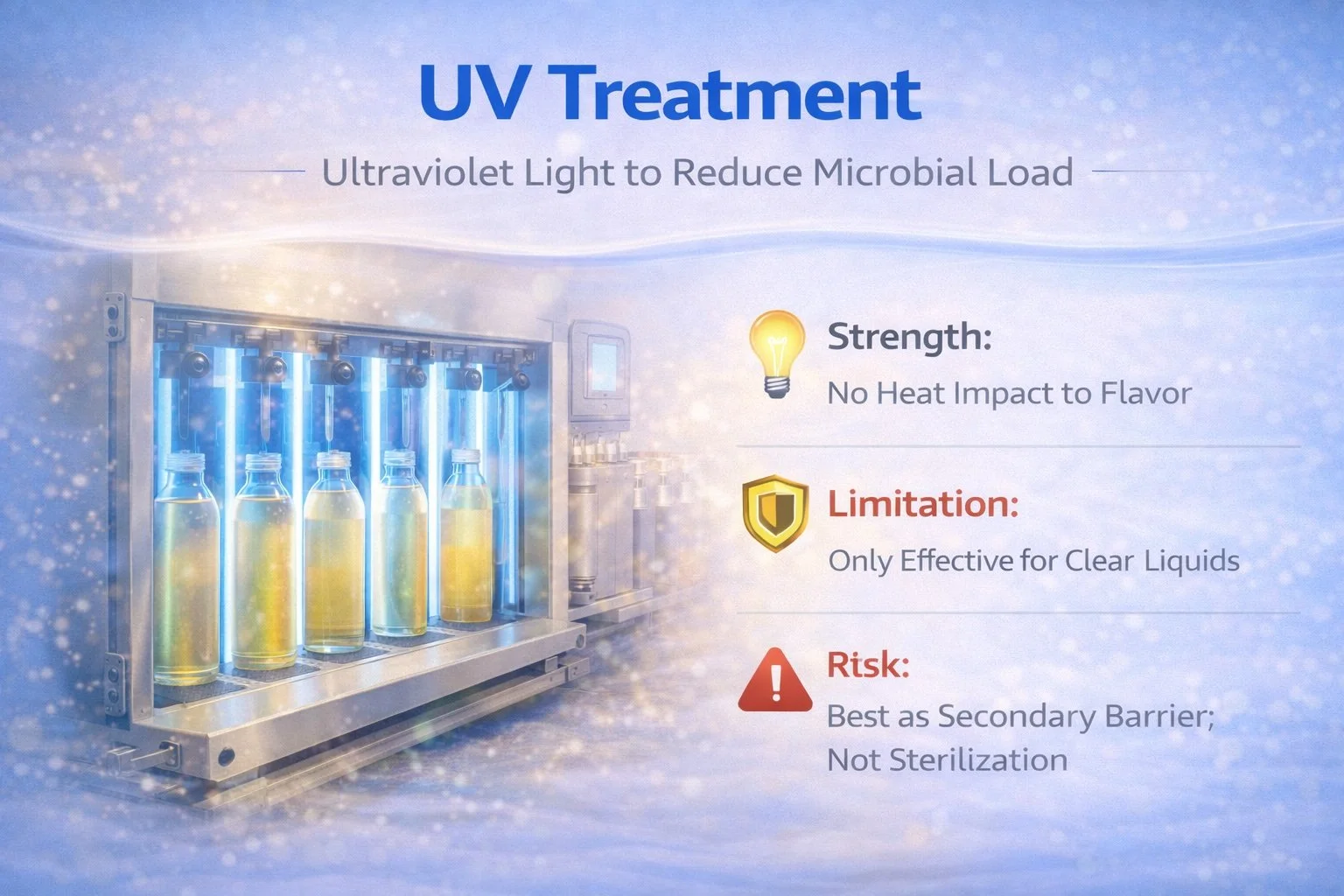
UV-C light damages microbial DNA during liquid flow exposure.
Effective only when light penetrates fully.
What happens to the drink:
No heat impact. Minimal flavor change.
Best use case:
Clear beverages.
Risks and limitations:
Ineffective in cloudy drinks.
Limited penetration.
Often supplemental only.
UV is gentle but limited.
Filtration
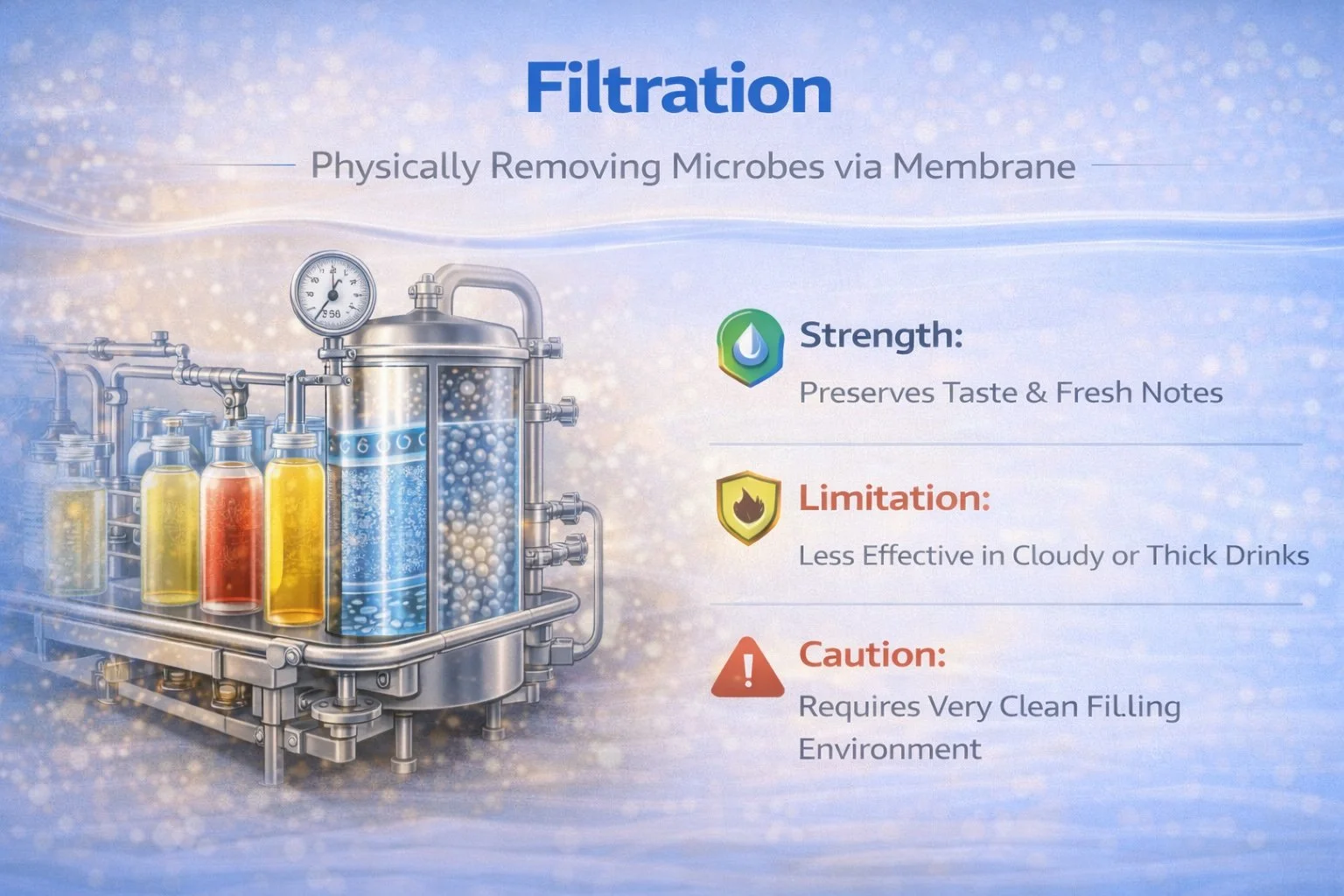
Liquid passes through fine membrane filters that physically remove microbes.
Requires sterile or ultra-clean filling afterward.
What happens to the drink:
Flavor preserved. May strip some mouthfeel components.
Best use case:
Clear beverages.
Risks and limitations:
Does not remove viruses.
Not suitable for pulpy drinks.
Filling contamination risk.
Filtration is gentle but highly dependent on sanitation.
High Pressure Processing (HPP)
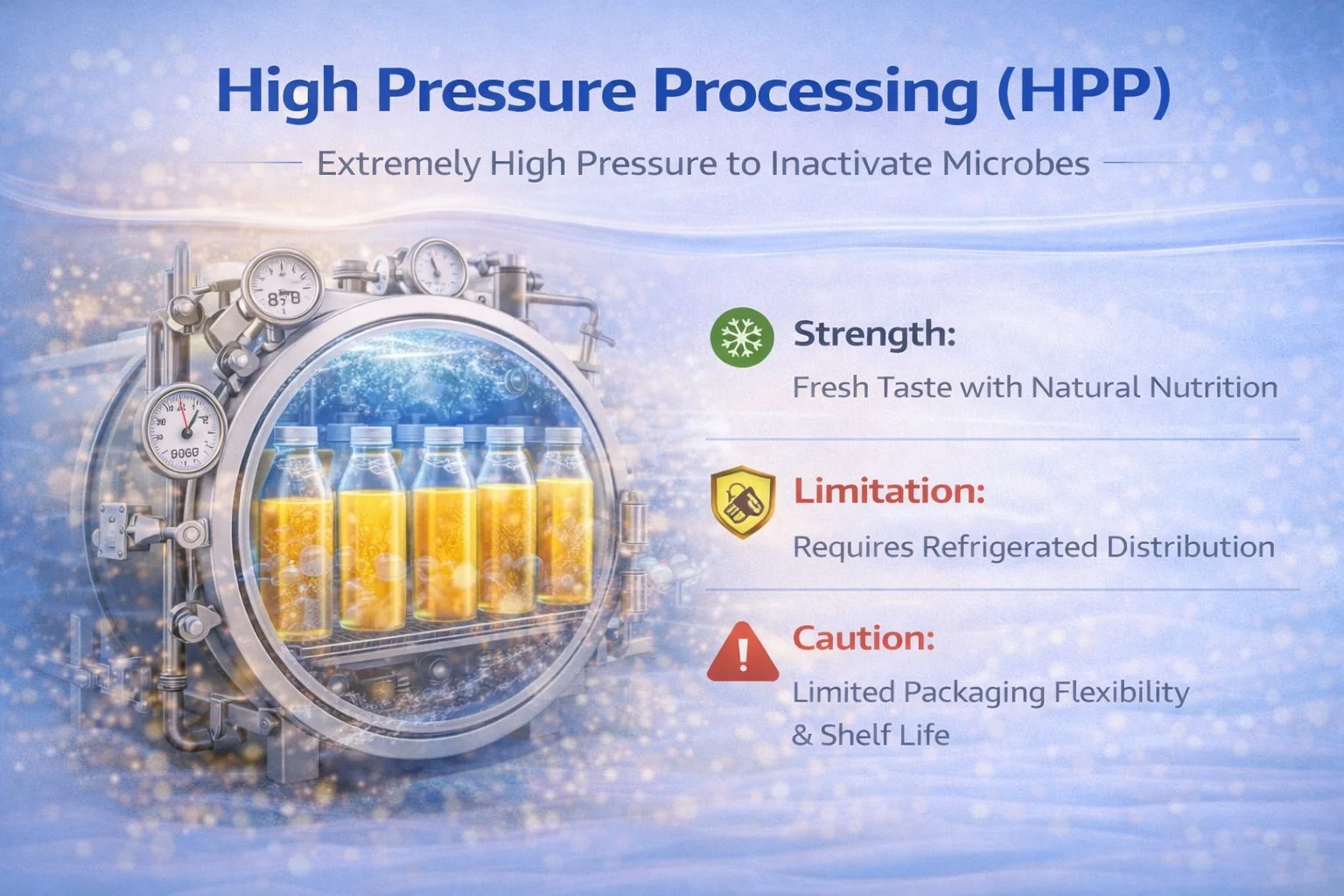
Sealed flexible packages are placed in a pressure chamber filled with water. Pressure inactivates microbes without heat.
What happens to the drink:
Fresh taste maintained. Refrigeration required.
Best use case:
Cold-pressed juices, refrigerated functional drinks.
Risks and limitations:
Expensive.
Packaging limitations.
Not fully shelf stable.
HPP prioritizes freshness over ambient shelf life.
Natural Antimicrobial Systems
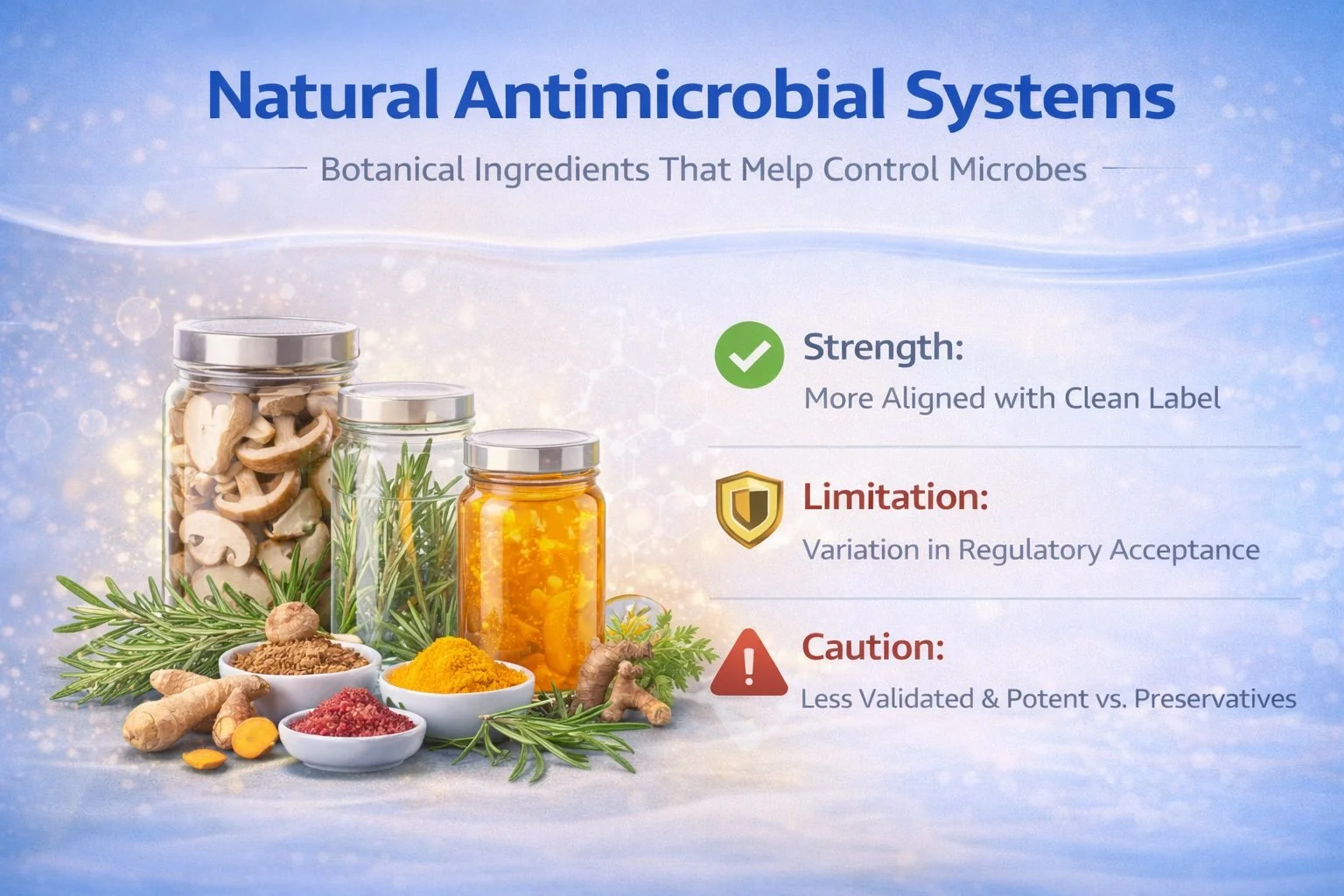
Plant-derived or mushroom-based compounds inhibit microbial growth through natural bioactive molecules.
They disrupt microbial cell membranes or metabolic pathways.
What happens to the drink:
Minimal flavor impact if properly formulated.
Best use case:
Clean-label positioning.
Risks and limitations:
Less validated than traditional preservatives.
May require combination with other systems.
Regulatory and labeling considerations.
Natural antimicrobials can support branding but must be validated carefully.
A Founder’s Practical Guide to Choosing the Right Protection System
This decision matrix gives founders clear, practical guidance for choosing the right preservation system based on their formula, packaging, distribution, and risk tolerance.
-
There is no “best” preservation method.
There is only the right method for:
• Your formulation
• Your packaging
• Your distribution
• Your risk tolerance
• Your brand positioningUse the matrix below to narrow your options.
Step 1: What Is Your pH?
Beverage pHWhat It MeansPrimary DirectionBelow 4.6 (High Acid)Pathogens cannot grow easilyHot fill, tunnel pasteurization, flash pasteurization, preservatives, VelcorinAbove 4.6 (Low Acid)Higher safety riskAseptic, retort, HPP (refrigerated), combination systems
Reality:
If your drink is low acid, your options become narrower and more technical.Step 2: Shelf-Stable or Refrigerated?
Distribution ModelBest-Fit SystemsRefrigerated OnlyHPP, filtration (with cold chain), some flash systemsAmbient / Shelf-StableHot fill (acidic), tunnel pasteurization, aseptic, retort, preservatives, Velcorin
Important:
If you want to sit in 7-Eleven at room temperature for 9–12 months, HPP is not your solution.Step 3: Carbonated or Still?
Beverage TypePreferred MethodsWatch Out ForCarbonatedTunnel pasteurization, Velcorin, intrinsic acidityRetort (destroys carbonation), excessive heatStillHot fill, aseptic, flash, retortOxidation during processing
Carbonation limits your options immediately.
Step 4: How Sensitive Is Your Formula?
Ingredient SensitivitySafer OptionsHeat-sensitive vitaminsHPP, filtration, UV, VelcorinProtein-heavy formulasAseptic (carefully controlled), retort (with reformulation)Botanical-heavy formulasFlash pasteurization, asepticArtificial sweetenersAvoid excessive heat (tunnel or retort can degrade some systems)
If your formula contains:
• NMN
• Adaptogens
• Probiotics
• Complex botanical extracts
• Natural colorsHeat becomes a bigger decision.
Step 5: Brand Positioning
Brand ClaimImplication“No Preservatives”Must rely on process (heat, aseptic, pressure)“Raw” or “Cold-Pressed”HPP required“All Natural”Avoid synthetic preservatives“Maximum Shelf Life”Retort or aseptic
Marketing and processing are directly linked. Founders often forget this.
Step 6: Shelf Life Target
Target Shelf LifeLikely Systems30–60 days (refrigerated)HPP, filtration6–9 months ambientHot fill (acidic), tunnel pasteurization12+ months ambientAseptic, retort
Longer shelf life always means more aggressive intervention.
Step 7: Risk Tolerance
Every preservation method sits on a risk spectrum.
Lower Risk (Stronger Kill Step)Higher Risk (Gentler Methods)RetortUVAsepticFiltrationTunnel PasteurizationHPPHot FillVelcorin (supplemental)
If you are launching nationally with large distribution and no margin for recall, your risk tolerance must be lower.
If you are launching regionally with refrigerated distribution, you can afford more flexibility.
Quick Founder Shortcut
If your drink is:
Acidic + Carbonated + Shelf Stable
→ Tunnel Pasteurization or Velcorin
Acidic + Still + Shelf Stable
→ Hot Fill or Flash Pasteurization
Low Acid + Shelf Stable
→ Aseptic or Retort
Refrigerated + Fresh Positioning
→ HPP
Clear + Low Complexity
→ Filtration or UV (with strict sanitation)
The Real-World Truth
The decision is rarely about science alone.
It is usually about:
• Co-packer capability
• Budget
• Target retailer requirements
• Distribution chain
• Risk tolerance
• Brand claimsThe best founders do not ask:
“What is the most advanced system?”
They ask:
“What system protects the drink enough — without hurting the taste or the brand?”
That is the real decision.
If you'd like next, I can build:
• A visual flowchart version
• A risk vs. flavor impact quadrant
• A carbonation-specific decision tree
• Or a version tailored specifically for energy drinks / protein RTDsTell me which layer you want to add.